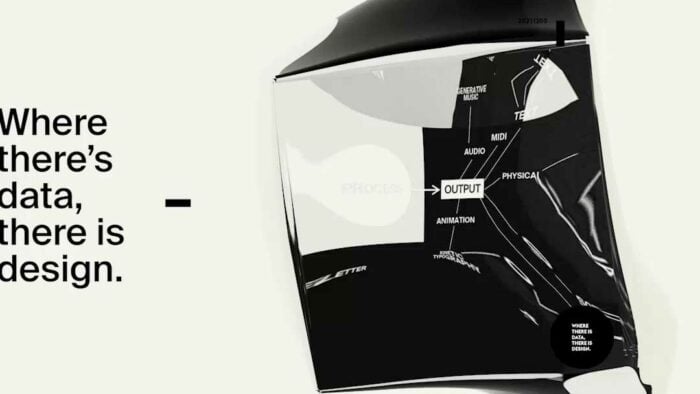
The Generative Mind: how to rise above technology and unlock a new way to think, design and tell stories for a world in motion.
The book
This book promises nothing less than an entirely new way of thinking about creative work. It’s an invitation to cut through the noise by cultivating a mindset that empowers you to design living, evolving and truly generative experiences. Through eight clear and actionable principles, I distill over twenty years at the crossroads of branding, systems thinking and technology into a powerful framework for designing dynamic narratives, interactive identities and flexible visual design systems. This is more than a book about design, it’s a guide for creators who want to lead with meaning, build with adaptability and stay relevant in an unpredictable world.
Now available worldwide at Amazon, Barnes&Noble and wherever you buy your books.
It’s a strange feeling to be a creative right now. Everywhere you look, new tools and technologies promise to amplify creativity by being faster, smarter and more powerful than ever before. We live in a moment where the boundaries of what’s possible are expanding so quickly, it’s easy to lose sight of where we’re actually going. Somewhere along the way, the clarity we once found in the creative process has started to blur. I’ve felt this firsthand. Not in a single moment, but over many. In meetings where clients asked for innovation, but feared risk. In studios where ‘creative freedom’ was celebrated, only to be constrained by timelines and toolkits. And in conversations (lots of them) with students, peers, technologists and artists all trying to make sense of what it means to create in a world that never hits pause. And that’s where this book begins. With a simple question: What does it take to create work that truly resonates in a culture that rewards speed over substance?
The biggest threat to today’s fast-moving creative landscape is an erosion of depth. As algorithms accelerate our workflows and generate at scale, we’re increasingly seduced by speed and spectacle. But in the rush to create with our new tools, we begin to ignore the deeper questions—the quiet, essential why behind our choices. In the realm of generative design, the true magic lies not in how fast we produce, but in how deeply we connect. People crave moments that do more than dazzle. They want experiences that spark curiosity, that speak to all senses and that echo long after the moment fades.
In a world racing forward on the rails of automation and AI, creativity risks becoming a casualty of convenience. Today’s algorithms, fueled by feedback loops and filtered recommendations, often push us into a cycle of repetition. They reinforce the familiar, promoting content that has already proven successful. This can suffocate creativity, trapping us in a landscape of predictable choices. The challenge for us as designers and creatives is to break free from this loop, to move beyond algorithmic predictability and seek inspiration in the unfamiliar.
The Generative Mind offers a shift in thinking—from designing things to designing relationships, from fixed outcomes to adaptive frameworks. This is not a guide to tools, but a call to action: to co-create with machines without surrendering authorship, to shape systems that surprise us and to tell stories that live, move and matter. This book presents a school of thought that aims to help you cut through the noise and design with both clarity and intent in a time when technology promises everything, but often delivers only distraction.
Welcome to The Generative Mind. Let’s co-create what comes next.
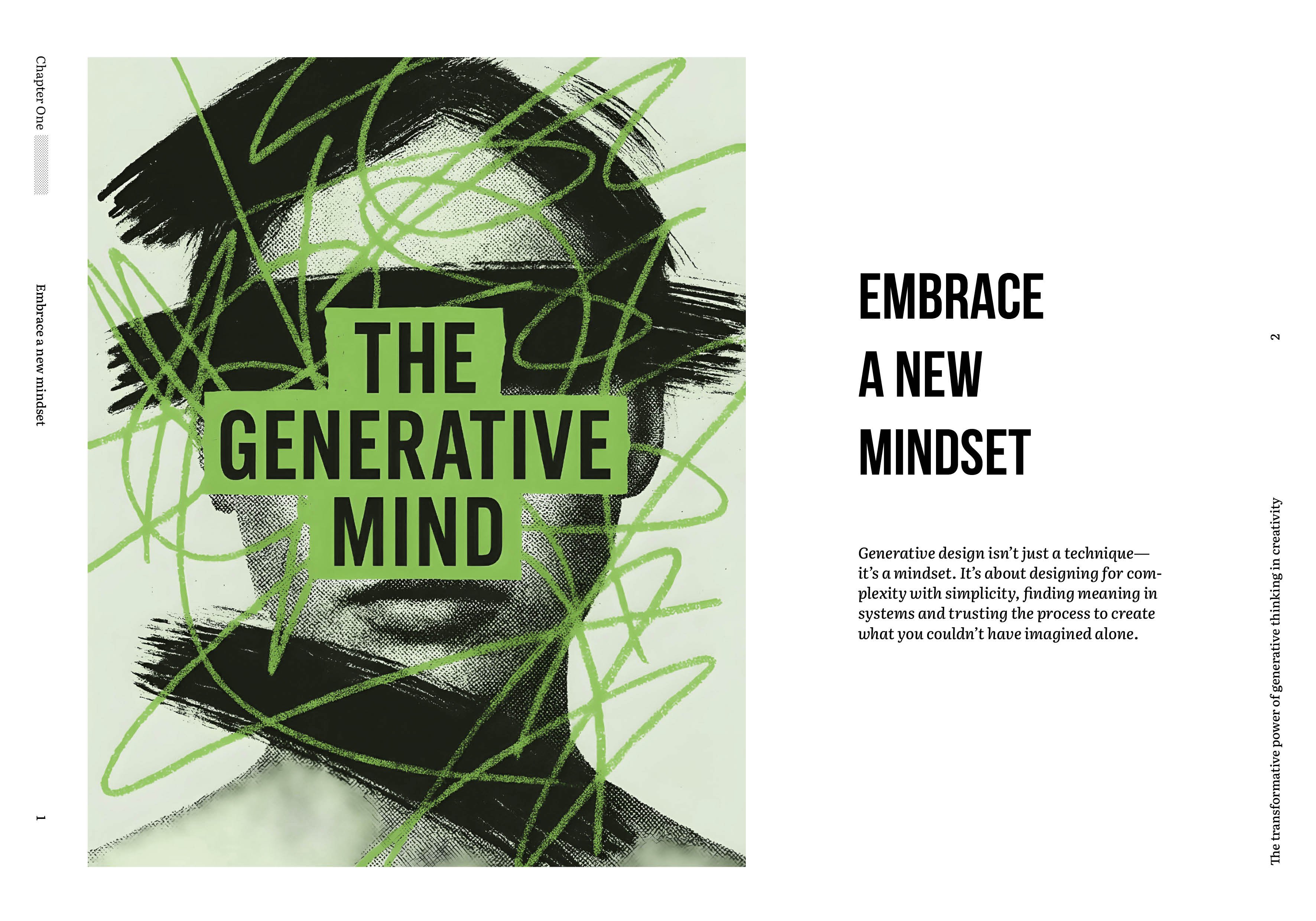
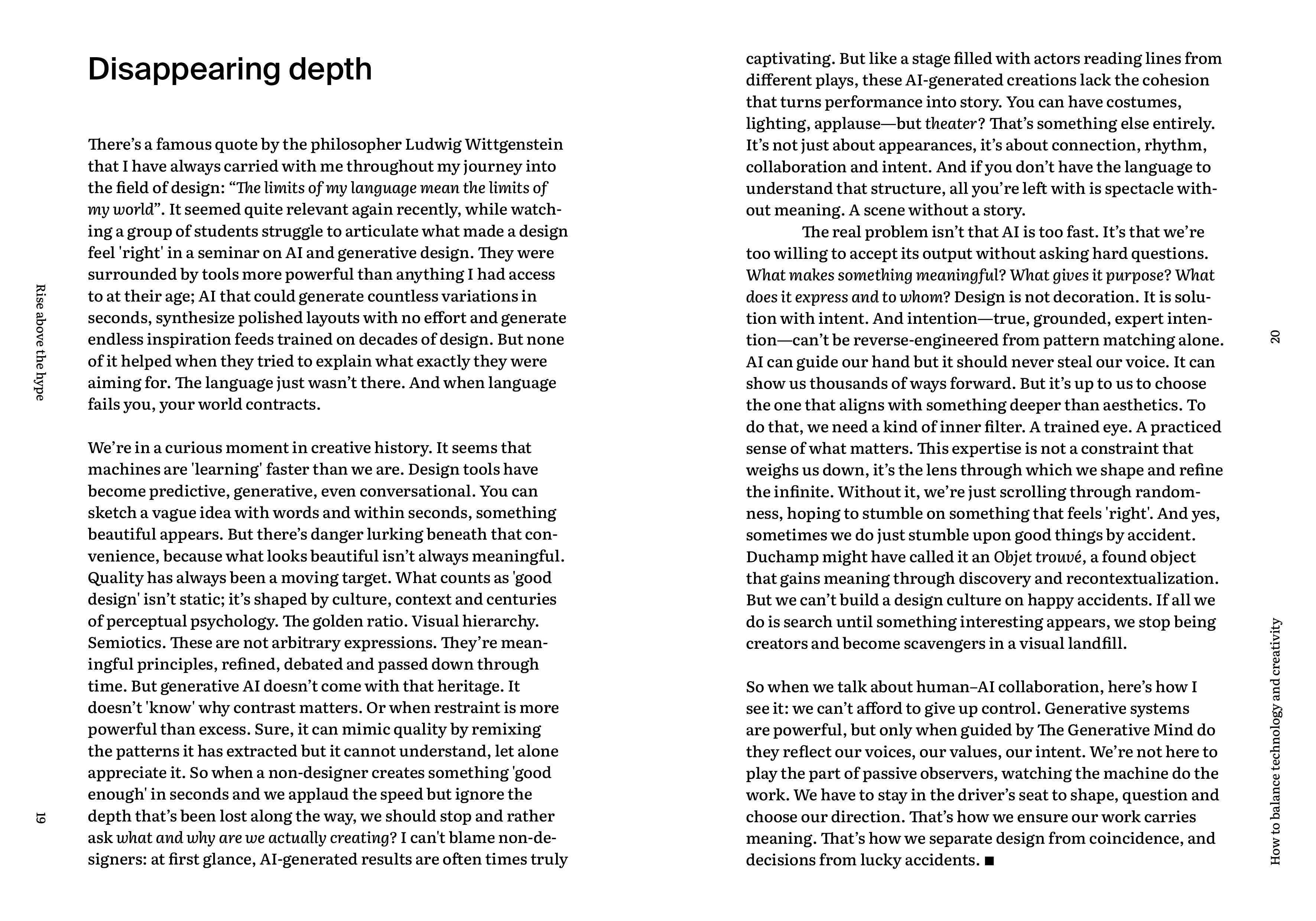
» If you’re into creative coding, visual communication, and generative design, THIS is the book to buy! «
Syntax and code examples are ephemeral. The ideas and perspectives in Patrik’s book are here to stay. As a long time creative coding educator, I can’t recommend it enough.
— Prof. Stig Møller Hansen, Professor, PhD at the Danish School of Media and Journalism, Copenhagen and expert on Computational Graphic Design and Creative Coding
» The new book by Patrik Hübner promises nothing less than an entirely new way of thinking about creative work. «
In it, he argues for greater courage in the face of uncertainty and for understanding AI, in a sense, as raw material for exploring one’s own signature. “In a world that never stands still, the real challenge is not defining what a brand is — but how a brand comes alive.” This is the paradigm shift Hübner develops through eight clear principles: away from static assets and toward living systems.
— Sonja Pham, Deputy Editor In Chief at Grafikmagazin
» You have given me the language I was looking for, as I’m unable to solve new challenges with old language. «
I believe that design is a problem solving lens where media, art, and work can affect the most people at scale. Often the work that gets the most notoriety is often tied to access to technology and the abilities to harness it’s potential.
— Matt Winkel, Executive Producer for branded content, advertising, and commercials for Apple and Man vs. Machine
» Patrik has a unique ability to make “the future” feel accessible and actionable. «
If you’re looking to understand the future of creativity and generative systems without getting lost in dry technicalities, this is an essential read.
Patrik Hübner’s The Generative Mind is a brilliant, eye-opening exploration of where human intuition meets systemic design. What I appreciated most is its versatility; while it’s deeply insightful and well-researched, it’s also remarkably accessible. I found myself treating it as a non-linear resource—the kind of book you can pick up, scan for a specific spark of inspiration, and dive into for thirty minutes. Every time I do, I’m left with an idea that I end up chewing on for the rest of the day. If you’re looking to understand the future of creativity and generative systems without getting lost in dry technicalities, this is an essential read.
— Zack Korzen, Professor of Architecture, Interior Design, and Sustainability at Humber Polytechnic
» This book made me realise most designers have creative minds, while only a few have generative minds. «
I think the generative mind is a level above the creative mind, and that the outcomes that a generative mind can design are more powerful than those given just by the sum of the separate creative and analytical minds. In this way a new perspective emerges [..] so that something even more beautiful, memorable and involving can be designed.
— Sergio Corini, designer and author of Dynamic identities: an analysis. A new classification system.

A key moment came from a conversation I had with Frieder Nake, one of the original pioneers and foundational thinkers of generative art, who has so generously provided the foreword to this book. While writing this book, I asked him what he thought about a phrase I’d been exploring; a term that seemed to capture the heart of my thinking: The Generative Mind. I expected critique, maybe even dismissal. What I got instead was a gentle kind of provocation. He said, maybe this wasn’t a term to be defined at all. Maybe its meaning should unfold over time—shaped not by rigid concepts, but by the reflections and interpretations of each person who encounters it. There was quiet wisdom in these words that helped me clarify my intent for this book: I’m not here to hand you a set of answers. And I’m not trying to convince you of yet another creative formula. Rather, what I want to share with you is a school of thought that helped me cut through the noise and design with both clarity and intent in a time when technology promises everything, but often delivers only distraction.
If the idea of stepping into this new way of thinking and creating feels like a lot to take in, don’t worry: this book is designed to offer insights that you can immediately apply to your creative journey. Each section stands on its own and can be read in any order while always providing clear moments of direction and discovery that don’t demand a deep time commitment. Think of it as a creative companion, ready when you need a spark of inspiration or a fresh perspective to unlock the next idea. It’s both a guide and a conversation, designed to meet you where you are—whether that’s in a quiet moment of reflection or a hectic rush to find a breakthrough.
The essence of this book is not about creating things that just grab attention. It’s about designing things that resonate. That mean something. That live. A kind of depth that, I worry, is slowly slipping away. Why? Because, as technology and AI tools become more capable and embedded into our lives, we’re being subtly nudged to delegate more than just tasks. We’re offloading the thinking, the imagining, the reflecting. By gradually embracing a form of cognitive outsourcing, we skip the slow, uncertain parts of the creative process in favor of instant output. But creativity isn’t just about what we produce. It’s about how we engage. What we notice. How we respond to the unknown. This isn’t to say that technology is the problem. It’s not. But the danger is mistaking speed for depth. Confusing synthesis with insight. Just because something is generated doesn’t mean it carries meaning, let alone understanding.I believe it’s not technology we’re lacking. It’s perspective. We don’t need more tools. We need a mindset that helps us navigate a world that’s increasingly fluid, unpredictable and interconnected. A mindset that embraces change without being consumed by it. That doesn’t treat design as a final product, but as an evolving story. That sees ideas not as fixed solutions, but as living systems rooted in context, shaped by dialogue and connected to everything around them.
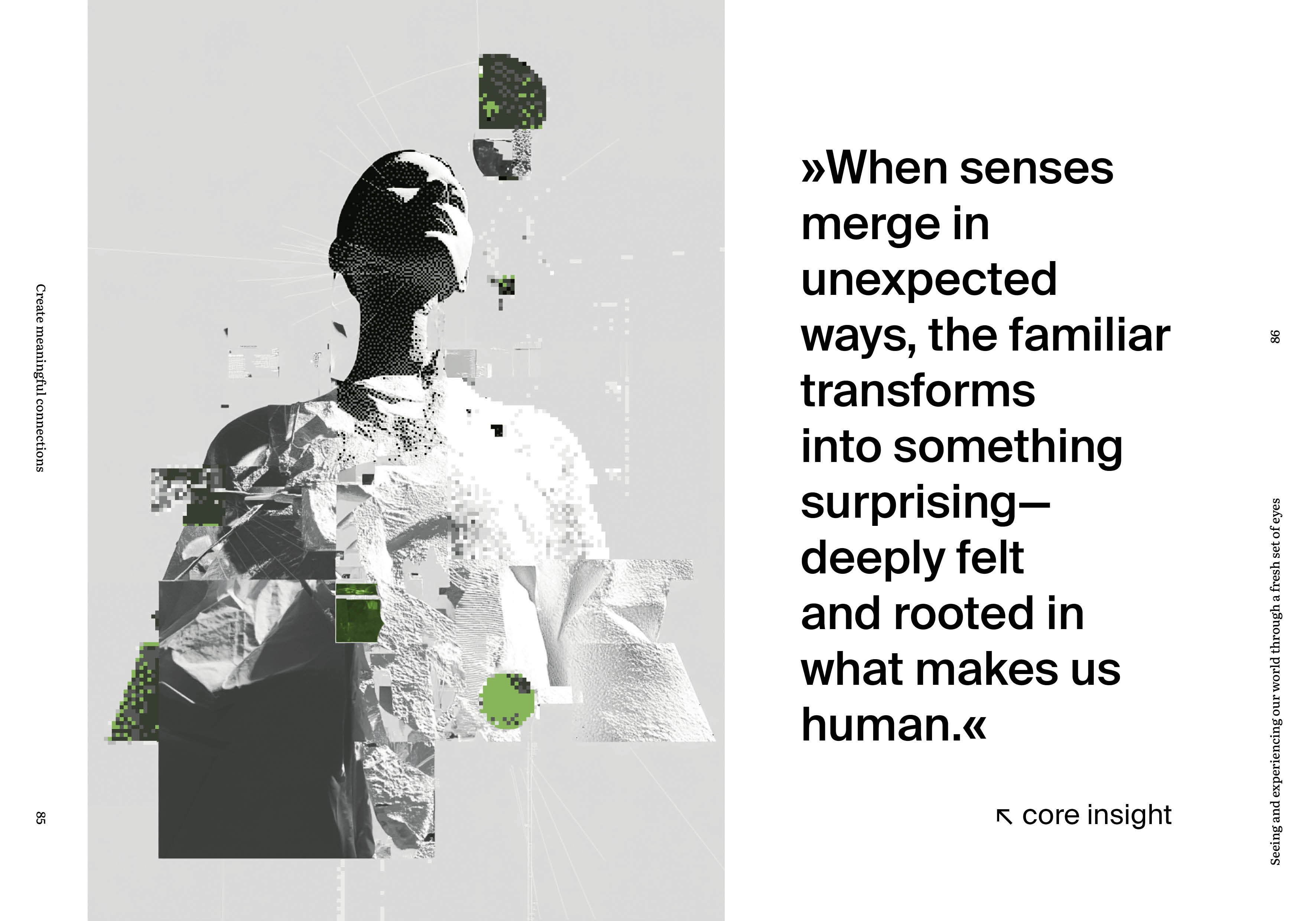
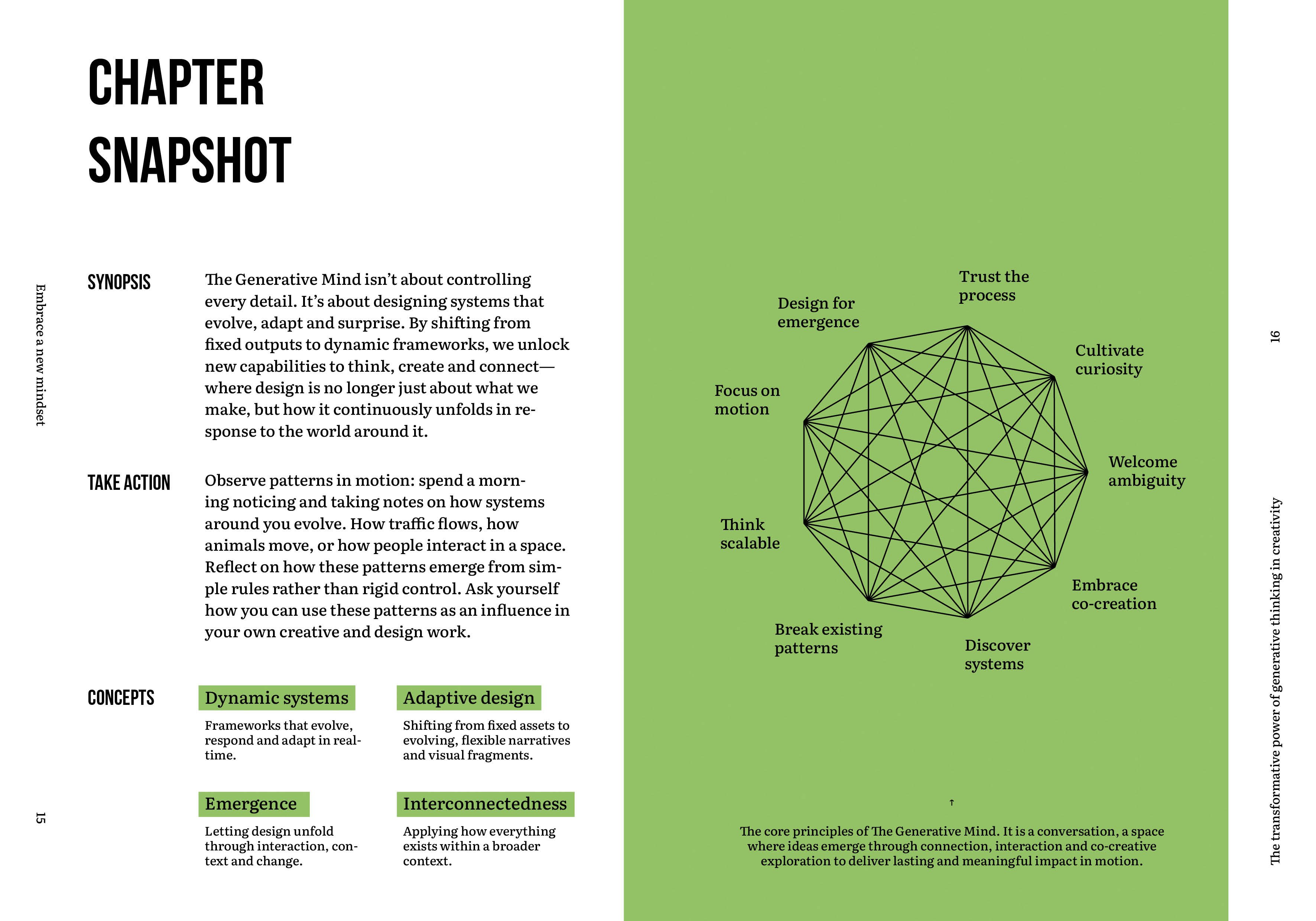
That simple question I began with about what it takes to create work that truly resonates in a culture that rewards speed over substance? Over time, it’s become more personal, splintering into a set of questions that now sit at the heart of my practice: How do we stay present in our own creative work? How do we co-create with machines without losing the qualities that make our work human? And how do we navigate these new emerging spaces while staying relevant? These are the questions that led me to write this book. And honestly, writing it was its own process of discovery. I had to figure out how to introduce ideas that span nuanced, often philosophical and sometimes deeply emotional disciplines—design, art, systems thinking, communication, culture, futures studies—in a way that felt grounded and not overwhelming. So I made the decision to root my writing in examples of brand and communication design. Not because it’s the whole story, but because it offers a familiar frame. A place to start, something tangible to hold onto.
The result is a book that distills two decades of work, exploration and research into eight core learnings, insights and ‘secrets’ born from my journey into the transformative nature of The Generative Mind. It’s neither a manual of techniques nor a deep dive into algorithms. As I said, my goal isn’t to define rules or teach you rigid methods. Rather, it’s to spark a sense of possibility in you. To hand you a map that leads to a space where creative work is not defined by fixed outcomes, but unfolds as a dynamic and evolving process of expression and engagement.
I know there’s risk in this. Any attempt to condense such layered and multifaceted topics into a single book risks oversimplification. I could have written five more chapters for every one I’ve included. But I chose focus over breadth and clarity over completeness. This book uses examples from the field of communication design, particularly identity and brand design, to demonstrate The Generative Mind in action. This choice isn’t meant to limit its scope, but to keep the ideas as concise and accessible as possible. The Generative Mind extends far beyond this singular field of application. Whether in biology, architecture, linguistics or music—creative processes shaped by rule-based systems and capable of producing endless variation appear across many domains. From researchers to artists, many actors are investigating how form and meaning evolve from systems built on rule-based and co-creative logic. Recognizing that these principles appear well beyond communication design reveals just how broadly they can be applied and how versatile and impactful they are across a multitude of fields. And so, while this book begins with design, its questions belong to a wider creative conversation that spans disciplines, rewrites roles and invites entirely new ways of action.
| Title | The Generative Mind A new approach to creative thinking |
| Type | Softcover |
| Dimensions | 150x210mm |
| Pages | 224 |
| ISBN | 978-3721210590 |
| Language | English |
| Soft-Release (Germany, Austria, Switzerland) | 2025 |
| Release (United States, United Kingdom) | 2026 |
| Publisher | niggli |